Search Results

A total of 869 images have been found for the keyword «ArtNotIdentified».
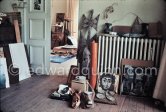
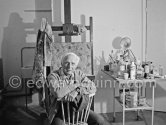
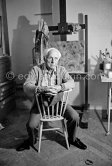
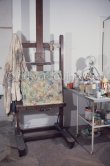
  • Max Ernst with his smock on the easel. Paris 1974. - Photo by Edward Quinn
  • Max Ernst at his studio. Paris 1974. - Photo by Edward Quinn
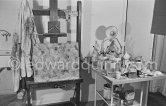
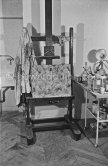
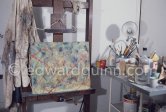
  • A corner of the studio of Max Ernst with his smock on the easel. Paris 1974. - Photo by Edward Quinn
  • A corner of the studio of Max Ernst with his smock on the easel. Paris 1974. - Photo by Edward Quinn
  • A corner of the studio of Max Ernst with his smock on the easel. Paris 1974. - Photo by Edward Quinn
  • A corner of the studio of Max Ernst with his smock on the easel. Paris 1974. - Photo by Edward Quinn
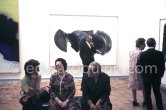
  • Hans Hartung at the exhibition "Hartung 1971-1974" at Galerie de France, Paris 1974. - Photo by Edward Quinn
  • Hans Hartung at the exhibition "Hartung 1971-1974" at Galerie de France, Paris 1974. - Photo by Edward Quinn
  • Hans Hartung at the exhibition "Hartung 1971-1974" at Galerie de France, Paris 1974. - Photo by Edward Quinn
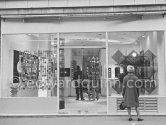
  • Gallery Denise René rive gauche (exhibition of kinetic art "L’idée et la matière" with Josef Albers, Sérvulo Esmeraldo, Gottfried Honegger, Julio Le Parc, François Morrelet, Aurélie Nemours, Jesus Rafael Soto, Luis Tomasello, Vasarely, Yvaral), Paris 1974. - Photo by Edward Quinn
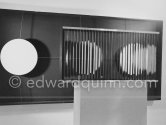
  • Works of Kinetic artist Julio Le Parc at the Gallery Denise René rive gauche. Exhibition "L’idée et la matière", Paris 1974. - Photo by Edward Quinn
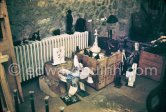
  • On the floor of the sculpture studio, cut out cardboard sculptures in contrast with some in bronze. Ground floor, Mas Notre-Dame-de-Vie, Mougins 1974. (Photographed after Pablo Picasso’s death.) - Photo by Edward Quinn
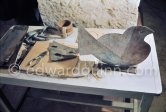
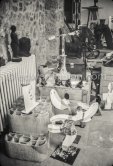
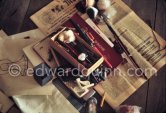
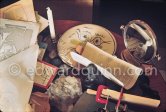
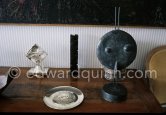
  • A dove cut out of metal, a sheet metal mask, and some of Pablo Picasso’s tools. Studio de la sculpture. Ground floor, Mas Notre-Dame-de-Vie, Mougins 1974. (Photographed after Pablo Picasso’s death.) - Photo by Edward Quinn
  • Studio de la sculpture. Ground floor, Mas Notre-Dame-de-Vie, Mougins 1974. (Photographed after Pablo Picasso’s death.) - Photo by Edward Quinn
  • Studio de la sculpture. Ground floor, Mas Notre-Dame-de-Vie, Mougins 1974. (Photographed after Pablo Picasso’s death.) - Photo by Edward Quinn
  • Studio de la sculpture. Ground floor, Mas Notre-Dame-de-Vie, Mougins 1974. (Photographed after Pablo Picasso’s death.) - Photo by Edward Quinn
  • Studio de la sculpture. Ground floor, Mas Notre-Dame-de-Vie, Mougins 1974. (Photographed after Pablo Picasso’s death.) - Photo by Edward Quinn
  • Studio de la sculpture. Ground floor, Mas Notre-Dame-de-Vie, Mougins 1974. (photographed after Pablo Picasso's death) - Photo by Edward Quinn
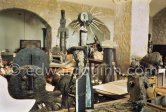
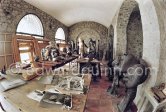
  • A view of the sculpture studio on the ground floor of Mas Notre-Dame-de-Vie. Amid Pablo Picasso's own sculptures, a plaster copy of Michelangelo's "Dying Slave". Mas Notre-Dame-de-Vie, Mougins 7/1974. (postumous). - Photo by Edward Quinn
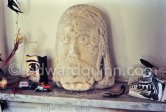
  • A view of the sculpture studio on the ground floor of Mas Notre-Dame-de-Vie. Amid Pablo Picasso's own sculptures, a plaster copy of Michelangelo's "Dying Slave". At right, "Head of a Woman", Boisgeloup, 1932. Mas Notre-Dame-de-Vie, Mougins 7/1974. (postumous). - Photo by Edward Quinn
  • Studio de la sculpture. Ground floor, Mas Notre-Dame-de-Vie, Mougins 1974. (photographed after Pablo Picasso's death) - Photo by Edward Quinn
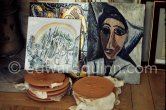
  • Numerous original ceramics, on the table in the sculpture studio. On the extreme left a carved wooden sculpture, under the table some cutouts and bird figures, against the bay windows stacks of paintings and large canvas frames. Mas Notre-Dame-de-Vie, Mougins 1974. (photographed after Pablo Picasso's death) - Photo by Edward Quinn
  • Studio de la sculpture. Ground floor, Mas Notre-Dame-de-Vie, Mougins 1974. (photographed after Pablo Picasso's death) - Photo by Edward Quinn
  • Mas Notre-Dame-de-Vie, Mougins 1974. (Photographed after Pablo Picasso’s death.) - Photo by Edward Quinn
  • Mas Notre-Dame-de-Vie, Mougins 1974. (Photographed after Pablo Picasso’s death.) - Photo by Edward Quinn
  • Mas Notre-Dame-de-Vie, Mougins 1974. (Photographed after Pablo Picasso’s death.) - Photo by Edward Quinn
  • Mas Notre-Dame-de-Vie, Mougins 1974. (Photographed after Pablo Picasso’s death.) - Photo by Edward Quinn
  • Mas Notre-Dame-de-Vie, Mougins 1974. (Photographed after Pablo Picasso’s death.) - Photo by Edward Quinn
  • Mas Notre-Dame-de-Vie, Mougins 1974. (Photographed after Pablo Picasso’s death.) - Photo by Edward Quinn
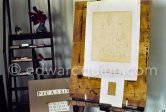
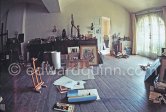
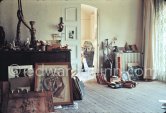
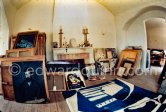
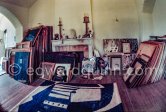
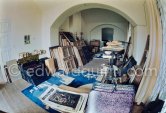
  • Pablo Picasso’s painting studio. He was always delighted to start work in a large, empty room, but gradually as objects came into the house that he thought might serve him as sources of inspiration or be integrated into a mixed-media sculpture, he found a place for everything  and then contented himself to work in a small corner. All around various art supplies, lithograph proofs and photographs, with Pablo Picasso’s works against the wall here and there. At least six easels were always set up. Pablo Picasso liked to keep things visible and always left an easel empty in order to have at least one free space to work. He often included these easels, sometimes holding blank canvases in his "interior landscapes. Mas Notre-Dame-de-Vie, Mougins 1974. (Photographed after Pablo Picasso’s death.) - Photo by Edward Quinn
  • Studio de la sculpture. Ground floor, Mas Notre-Dame-de-Vie, Mougins 1974. (Photographed after Pablo Picasso’s death.) - Photo by Edward Quinn
  • see also Pic740249. Mas Notre-Dame-de-Vie, Mougins 1974. (Photographed after Pablo Picasso’s death.) - Photo by Edward Quinn
  • Mas Notre-Dame-de-Vie, Mougins 1974. (Photographed after Pablo Picasso’s death.) - Photo by Edward Quinn
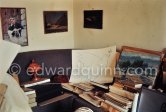
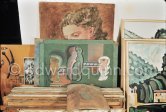
  • Paintings and other works Pablo Picasso kept for himself. Mas Notre-Dame-de-Vie, Mougins 1974. (Photographed after Pablo Picasso’s death.) - Photo by Edward Quinn
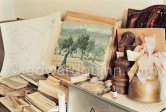
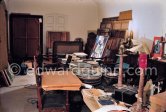
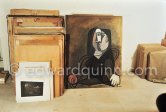
  • see also Pic740224 and Pic740225. A large room filled with all sorts of Pablo Picasso’s works, paintings from all different periods stacked against the walls and many folders filled with drawings, lithographs and linocuts. Mas Notre-Dame-de-Vie, Mougins 1974. (Photographed after Pablo Picasso’s death.) - Photo by Edward Quinn
  • Mas Notre-Dame-de-Vie, Mougins 1974. (Photographed after Pablo Picasso’s death.) - Photo by Edward Quinn
  • Mas Notre-Dame-de-Vie, Mougins 1974. - Photo by Edward Quinn
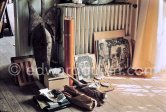
  • One of the unfurnished rooms at Mas Notre-Dame-de-Vie that Pablo Picasso used as studios. The studio as it was before he died. Mougins 1974. - Photo by Edward Quinn
  • Mas Notre-Dame-de-Vie, Mougins 1974. (Photographed after Pablo Picasso’s death.) - Photo by Edward Quinn
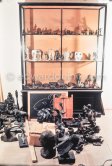
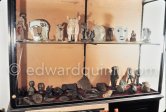
  • Glass cabinet (vitrine) in the old "salle à manger" at Mas Notre-Dame-de-Vie. (the same glass cabinet that was "Le musée" of the studio des Grands-Augustins in Paris, see photo Brassaï, 25 Oct 1943). Mas Notre-Dame-de-Vie, Mougins 1974. (Photographed after Pablo Picasso’s death.) - Photo by Edward Quinn
  • Glass cabinet (vitrine) in the old "salle à manger" at Mas Notre-Dame-de-Vie, the same glass cabinet that was "Le musée" of the studio des Grands-Augustins in Paris, see photo Brassaï, 25 Oct 1943. Mas Notre-Dame-de-Vie, Mougins 1974. (Photographed after Pablo Picasso’s death.) - Photo by Edward Quinn
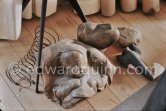
  • On the floor of the sculpture studio a relief of a sleeping baby contrasts with some grim sculptures. Pablo Picasso reserved the spring bed and some paper clips for eventual views in some of this works. Mas Notre-Dame-de-Vie, Mougins 1974. (Photographed after Pablo Picasso’s death.) - Photo by Edward Quinn
  • Mas Notre-Dame-de-Vie, Mougins 1974. - Photo by Edward Quinn
  • Studio de la sculpture. Ground floor, Mas Notre-Dame-de-Vie, Mougins 1974. - Photo by Edward Quinn
  • Mas Notre-Dame-de-Vie, Mougins 1974. (Photographed after Pablo Picasso’s death.) - Photo by Edward Quinn
  • Mas Notre-Dame-de-Vie, Mougins 1974. (Photographed after Pablo Picasso’s death.) - Photo by Edward Quinn
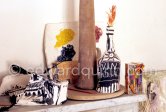
  • Works on a sideboard in Max Ernst's house in Seillans 1975. - Photo by Edward Quinn
  • Photo taken in the second house of Max Ernst and Dorothea Tanning in Seillans 1975. - Photo by Edward Quinn
  • Artwork by Max Ernst. Photo taken in the second house of Max Ernst and Dorothea Tanning in Seillans 1975. - Photo by Edward Quinn
  • Painting in the garden of the second house of Max Ernst and Dorothea Tanning in Seillans 1975. - Photo by Edward Quinn
  • In the garden of the second house of Max Ernst and Dorothea Tanning in Seillans 1975. - Photo by Edward Quinn
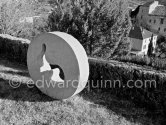
  • Sculpture (Hans Arp?) in the garden of the second house of Max Ernst and Dorothea Tanning in Seillans 1975. - Photo by Edward Quinn
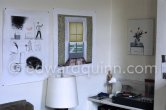
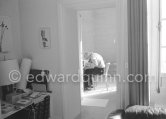
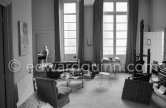
  • David Hockney's apartment in Paris 1975. - Photo by Edward Quinn
  • David Hockney working on the set design for "The Rake's Progress" at England’s Glyndebourne Opera Festival Paris 1975. 1975. - Photo by Edward Quinn
  • David Hockney working on the set design for "The Rake's Progress" at England’s Glyndebourne Opera Festival Paris 1975. 1975. - Photo by Edward Quinn
  • David Hockney working on the set design for "The Rake's Progress" at England’s Glyndebourne Opera Festival Paris 1975. - Photo by Edward Quinn
  • David Hockney at his apartement in Paris 1975. - Photo by Edward Quinn
  • Richard Paul Lohse, one of the main representatives of the concrete and constructive art movements, 1975 at his studio in Zurich. - Photo by Edward Quinn
  • Richard Paul Lohse, one of the main representatives of the concrete and constructive art movements, 1975 at his studio in Zurich. - Photo by Edward Quinn
  • Richard Paul Lohse, one of the main representatives of the concrete and constructive art movements, 1975 at his studio in Zurich. - Photo by Edward Quinn