Search Results

A total of 1615 images have been found for the keyword «AtWork».
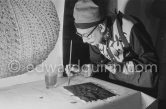
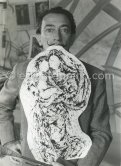
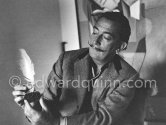
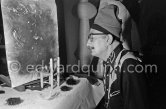
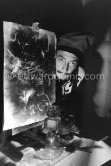
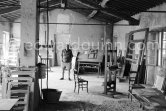
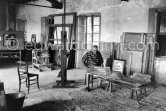
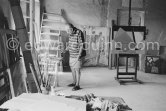
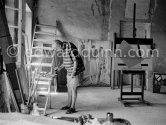
  • Dalí poses at his studio with his ink drawing of a madonna and her child and the painting "Cosmic Madonna", finished in 1958. At Salvador Dalí's house, Portlligat, Cadaqués, 1957. - Photo by Edward Quinn
  • Dalí poses at his studio with his ink drawing of a madonna and her child and the painting "Cosmic Madonna", finished in 1958. At Salvador Dalí's house, Portlligat, Cadaqués, 1957. - Photo by Edward Quinn
  •  - Photo by Edward Quinn
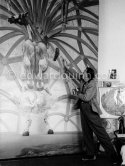
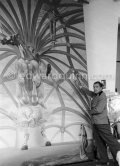
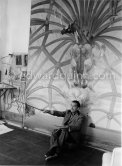
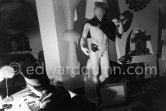
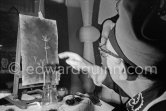
  • Salvador Dalí and his oil painting "Santiago El Grande", featuring a rearing white horse with St. James of Compostela, the patron saint of Spain, on its back. Portlligat, Cadaqués, 1957. - Photo by Edward Quinn
  • Salvador Dalí’s oil painting Santiago El Grande, featuring a rearing white horse with St. James of Compostela, the patron saint of Spain, on its back. Now at the Beaverbrook Art Gallery, Fredericton, Canada. Port Lligat, Cadaques 1957. - Photo by Edward Quinn
  • Salvador Dalí’s oil painting Santiago El Grande, featuring a rearing white horse with St. James of Compostela, the patron saint of Spain, on its back. Now at the Beaverbrook Art Gallery, Fredericton, Canada. Portlligat, Cadaqués, 1957. - Photo by Edward Quinn
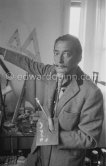
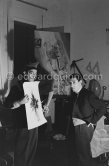
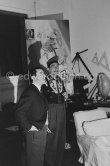
  • Salvador Dalí and French painter Raymond Moretti. At Dalí's house, Portlligat, Cadaqués, 1957. - Photo by Edward Quinn
  • Salvador Dalí and French painter Raymond Moretti. At Dalí's house, Portlligat, Cadaqués, 1957. - Photo by Edward Quinn
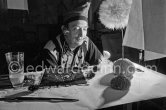
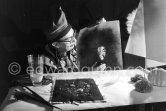
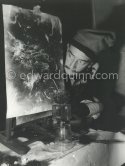
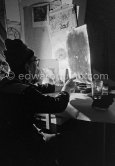
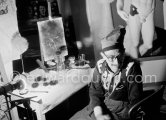
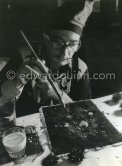
  • Salvador Dalí works on his experiments with the sea urchin holding a swan feather in its mouth. He sits in front of his painting "Taula davant el mar (Table in front of the Sea) Homage to Eric Satie". Portlligat, Cadaqués 1957. - Photo by Edward Quinn
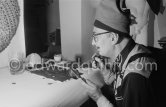
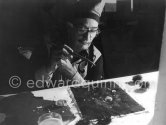
  • Salvador Dalí works on his experiments with the sea urchin holding a swan feather and moving backwards and forewards thus marking the blackened paper. These experiments he is carrying out at his studio in his Spanish home at Portlligat, Cadaqués, on the Costa Brava 1957. - Photo by Edward Quinn
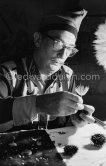
  • Salvador Dalí works on his experiments with the sea urchin (oursin) holding a swanfeather and moving backwards and forewards thus marking the blackened paper. These experiments he is carrying out at his studio in his Spanish home at Portlligat, Cadaqués, on the Costa Brava 1957. - Photo by Edward Quinn
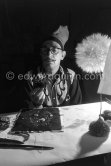
  • Salvador Dalí works on his experiments with the sea urchin holding a swanfeather or a dried flower in its mouth and moving backwards and forewards thus marking the blackened paper. These experiments he is carrying out at his studio in his Spanish home at Portlligat, Cadaqués, on the Costa Brava 1957. - Photo by Edward Quinn
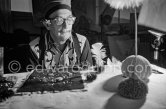
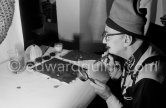
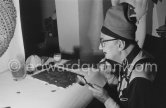
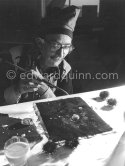
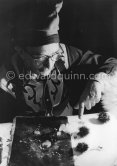
  • Salvador Dalí with his sea urchins. A swan's feather he puts in the sea urchin's mouth is allowed to slightly touch a sheet of blackened paper. The movements then made are traced on the paper. At Salvador Dalí's house, Portlligat, Cadaqués 1957. - Photo by Edward Quinn
  • Salvador Dalí with his sea urchins. A swan's feather he puts in the sea urchin's mouth is allowed to slightly touch a sheet of blackened paper. The movements then made are traced on the paper. At Salvador Dalí's house, Portlligat, Cadaqués 1957. - Photo by Edward Quinn
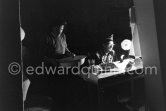
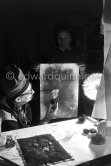
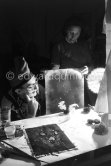
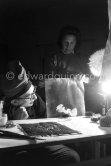
  • Watched by his wife Gala, Salvador Dalí works on his experiments with the sea urchin holding a swan feather and moving backwards and forewards thus marking the blackened paper. These experiments he is carrying out at his studio in his Spanish home at Portlligat, Cadaqués, on the Costa Brava 1957. - Photo by Edward Quinn
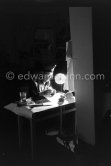
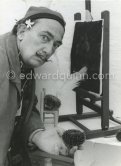
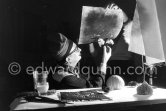
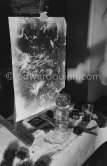
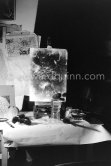
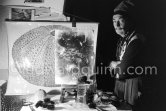
  • Salvador Dalí shows the set up from which he hopes to obtain the painting, a sea urchin is placed on a small chair and in its mouth, the "Aristotle's lantern", he puts a swan’s feather or other light object. The swan’s feather (he owns two swans which swim around in the sea in front of his home at Port Lligat) is allowed to slightly touch a sheet of blackened paper. The movements then made by the "oursin" are traced on the paper. At Salvador Dalí's house, Portlligat, Cadaqués 1957. - Photo by Edward Quinn
  • Salvador Dalí shows the set up from which he hopes to obtain the painting, a sea urchin is placed on a small chair and in its mouth, the "Aristotle's lantern", he puts a swan’s feather or other light object. The swan’s feather (he owns two swans which swim around in the sea in front of his home at Port Lligat) is allowed to slightly touch a sheet of blackened paper. The movements then made by the "oursin" are traced on the paper. At Salvador Dalí's house, Portlligat, Cadaqués 1957. - Photo by Edward Quinn
  • Salvador Dalí works on his experiments with the sea urchin (oursin) holding a swanfeather or a dried flower and moving backwards and forewards thus marking the blackened paper. These experiments he is carrying out at his studio in his Spanish home at Portlligat, Cadaqués, on the Costa Brava 1957. - Photo by Edward Quinn
  • Watched by his wife Gala, Salvador Dalí works on his experiments with the sea urchin holding a swan feather and moving backwards and forewards thus marking the blackened paper. These experiments he is carrying out at his studio in his Spanish home at Portlligat, Cadaqués, on the Costa Brava 1957. - Photo by Edward Quinn
  • Watched by his wife Gala, Salvador Dalí works on his experiments with the sea urchin holding a swan feather and moving backwards and forewards thus marking the blackened paper. These experiments he is carrying out at his studio in his Spanish home at Portlligat, Cadaqués, on the Costa Brava 1957. - Photo by Edward Quinn
  • Watched by his wife Gala, Salvador Dalí works on his experiments with the sea urchin holding a swan feather and moving backwards and forewards thus marking the blackened paper. These experiments he is carrying out at his studio in his Spanish home at Portlligat, Cadaqués, on the Costa Brava 1957. - Photo by Edward Quinn
  • Salvador Dalí works on his experiments with the sea urchin holding a swan feather and moving backwards and forewards thus marking the blackened paper. These experiments he is carrying out at his studio in his Spanish home at Port Lligas on the Costa Brava 1957. - Photo by Edward Quinn
  • Salvador Dalí works on his experiments with the sea urchin holding a swan feather or a dry flower and moving backwards and forewards thus marking the blackened paper. These experiments he is carrying out at his studio in his Spanish home at Portlligat, Cadaqués on the Costa Brava 1957. - Photo by Edward Quinn
  • Salvador Dalí works on his experiments with the sea urchin he calls Sputnik holding a dried flower and moving backwards and forewards thus marking the blackened paper. These experiments he is carrying out at his studio in his Spanish home at Portlligat, Cadaqués on the Costa Brava 1957. - Photo by Edward Quinn
  • Salvador Dalí shows the set up from which he hopes to obtain the painting, a sea urchin is placed on an overturned inkwell glass and in its mouth, the"Aristotle's lantern", which has the movements of a human hand) he puts a swan’s feather or here a light dried up flower. The object is allowed to slightly touch a sheet of blackened paper. The movements then made by the sea urchin are traced on the paper. At Salvador Dalí's house, Portlligat, Cadaqués 1957. - Photo by Edward Quinn
  • First results of Salvador Dalí's experiments with the sea urchin holding a swanfeather or a dried flower and moving backwards and forewards thus marking the blackened paper. These experiments he is carrying out at his studio in his Spanish home at Portlligat, Cadaqués on the Costa Brava 1957. - Photo by Edward Quinn
  • The set up from which Salvador Dalí hopes to obtain the painting, a sea urchin is placed on an overturned inkwell glass and in its mouth ("Aristotle's lantern" which has the movements of a human hand) he puts a swan’s feather or here a light dried up flower. The object is allowed to slightly touch a sheet of blackened paper. The movements then made by the sea urchin are traced on the paper. At Salvador Dalí's house, Portlligat, Cadaqués 1957. - Photo by Edward Quinn
  • Salvador Dalí shows the set up from which he hopes to obtain the painting, a sea urchin is placed on an overturned inkwell glass and in its mouth, the"Aristotle's lantern", he puts a swan’s feather or here a light dried up flower. The object is allowed to slightly touch a sheet of blackened paper. The movements then made by the sea urchin are traced on the paper. At Salvador Dalí's house, Portlligat, Cadaqués 1957. - Photo by Edward Quinn
  • The set up from which Salvador Dalí hopes to obtain the painting, a sea urchin is placed on an overturned inkwell glass and in its mouth ("Aristotle's lantern" which has the movements of a human hand) he puts a swan’s feather or here a light dried up flower. The object is allowed to slightly touch a sheet of blackened paper. The movements then made by the sea urchin are traced on the paper. At Salvador Dalí's house, Portlligat, Cadaqués 1957. - Photo by Edward Quinn
  • The set up from which Salvador Dalí hopes to obtain the painting, a sea urchin is placed on an overturned inkwell glass and in its mouth ("Aristotle's lantern" which has the movements of a human hand) he puts a swan’s feather or here a light dried up flower. The object is allowed to slightly touch a sheet of blackened paper. The movements then made by the sea urchin are traced on the paper. At Salvador Dalí's house, Portlligat, Cadaqués 1957. - Photo by Edward Quinn
  • Salvador Dalí shows the set up from which he hopes to obtain a painting: A sea urchin is placed on an overturned inkwell glass and in its mouth, the "Aristotle's lantern", he puts a swan’s feather or here a light dried up flower. The object is allowed to slightly touch a sheet of blackened paper. The movements then made by the sea urchin are traced on the paper. The display board shows a sea urchin fossile. At Dalí's house, Portlligat, Cadaqués 1957. - Photo by Edward Quinn
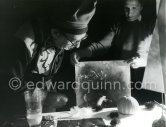
  • Salvador Dalí demonstrates the origin of the "oursin", a liquid which takes on a particular form. Here he is seen using milk and water. The display board shows a sea urchin fossile. At Salvador Dalí's house, Portlligat, Cadaqués 1957. - Photo by Edward Quinn
  • Salvador Dalí demonstrates the origin of the "oursin", a liquid which takes on a particular form. Here he is seen using milk and water. At Salvador Dalí's house, Portlligat, Cadaqués 1957. - Photo by Edward Quinn
  • Salvador Dalí demonstrates the origin of the "oursin", a liquid which takes on a particular form. Here he is seen using milk and water. At Salvador Dalí's house, Portlligat, Cadaqués 1957. - Photo by Edward Quinn
  • Salvador Dalí demonstrates his Canadian painter friend Philips the origin of the "oursin", a liquid which takes on a particular form. Here he is seen using milk and water. At Salvador Dalí's house, Portlligat, Cadaqués 1957. - Photo by Edward Quinn
  • Dalí demonstrates his Canadian painter friend Philips the origin of the "oursin", a liquid which takes on a particular form. Here he is seen using milk and water. At Salvador Dalí's house, Portlligat, Cadaqués 1957. - Photo by Edward Quinn
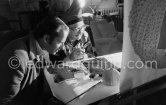
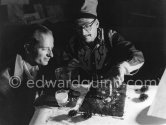
  • Salvador Dalí, his wife Gala and a Canadian painter friend Philipps watch fascinated as the "oursin" draws the paper, this time with a light dried up flower. At Dalí's house, Portlligat, Cadaqués 1975 - Photo by Edward Quinn
  • Salvador Dalí demonstrates the origin of the "oursin", a liquid which takes on a particular form. Here he is seen using milk and water. The display board shows a sea urchin fossile. At Salvador Dalí's house, Portlligat, Cadaqués 1957. - Photo by Edward Quinn
  • Salvador Dalí demonstrates his view of the origin of the sea urchin, a liquid which takes on a particular form. At Dalí's house, Portlligat, Cadaqués 1957. - Photo by Edward Quinn
  • Salvador Dalí with his sea urchins. A swan's feather he puts in the sea urchin's mouth is allowed to slightly touch a sheet of blackened paper. The movements then made are traced on the paper. At Salvador Dalí's house, Portlligat, Cadaqués 1957. - Photo by Edward Quinn
  • Salvador Dalí, his wife Gala and a Canadian painter friend Philipps watch fascinated as the "oursin" draws the paper, this time with a light dried up flower. At Dalí's house, Portlligat, Cadaqués 1975 - Photo by Edward Quinn
  • Watched by his wife Gala, Salvador Dalí works on his experiments with the sea urchin holding a swan feather and moving backwards and forewards thus marking the blackened paper. These experiments he is carrying out at his atelier in his Spanish home at Portlligat, Cadaqués, on the Costa Brava 1957. - Photo by Edward Quinn
  • Dalí demonstrates the origin of the "oursin", a liquid which takes on a particular form. Here he is seen using milk and water. At Salvador Dalí's house, Portlligat, Cadaqués 1957. - Photo by Edward Quinn
  • Salvador Dalí demonstrates the origin of the "oursin", a liquid which takes on a particular form. Here he is seen using milk and water. At Salvador Dalí's house, Portlligat, Cadaqués 1957. - Photo by Edward Quinn
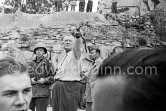
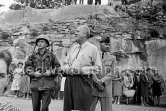
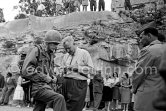
  • Lt. Sam Loggins (Frank Sinatra) and director Delmer Daves during the filming of "Kings Go Forth". Tourrettes-sur-Loup 1957. - Photo by Edward Quinn
  • Lt. Sam Loggins (Frank Sinatra) and director Delmer Daves during the filming of "Kings Go Forth". Tourrettes-sur-Loup 1957. - Photo by Edward Quinn
  • Lt. Sam Loggins (Frank Sinatra) and director Delmer Daves during the filming of "Kings Go Forth". Tourrettes-sur-Loup 1957. - Photo by Edward Quinn
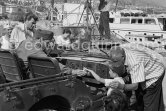
  • Lt. Sam Loggins (Frank Sinatra) and director Delmer Daves during the filming of "Kings Go Forth". Villefranche 1957. Car: 1951 or 52 Jeep M38 - Photo by Edward Quinn
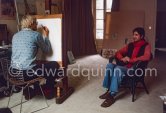
  • David Hockney working on the drawing "Carlos" at his studio in Paris 1975. - Photo by Edward Quinn
  • Alberto Magnelli at his studio La Ferrage, Plan-de-Grasse 1957. - Photo by Edward Quinn
  • Alberto Magnelli at his studio La Ferrage, Plan-de-Grasse 1957. - Photo by Edward Quinn
  • Alberto Magnelli at his studio La Ferrage, Plan-de-Grasse 1957. - Photo by Edward Quinn
  • Alberto Magnelli at work at his studio La Ferrage, Plan-de-Grasse 1957. - Photo by Edward Quinn
  • Alberto Magnelli at his studio La Ferrage, Plan-de-Grasse 1957. - Photo by Edward Quinn
  • Alberto Magnelli viewing catalogue of his exibition at Galerie de France, Paris, 1960, at his studio La Ferrage, Plan-de-Grasse 1957. - Photo by Edward Quinn
  • Alberto Magnelli at his studio La Ferrage, Plan-de-Grasse 1957. - Photo by Edward Quinn
  • Alberto Magnelli at his studio La Ferrage, Plan-de-Grasse 1957. - Photo by Edward Quinn
  • Alberto Magnelli at his studio La Ferrage, Plan-de-Grasse 1957. - Photo by Edward Quinn
  • Alberto Magnelli at his studio La Ferrage, Plan-de-Grasse 1957. - Photo by Edward Quinn
  • Alberto Magnelli in the garden of his studio La Ferrage, Plan-de-Grasse 1957. - Photo by Edward Quinn